NSW Solar & Battery Incentives Update: Household Income Eligibility Drops from $210,000 to $150,000
A new update to NSW solar and battery incentives
If you’ve been considering installing solar panels or a home battery, there’s an important government update worth knowing about.
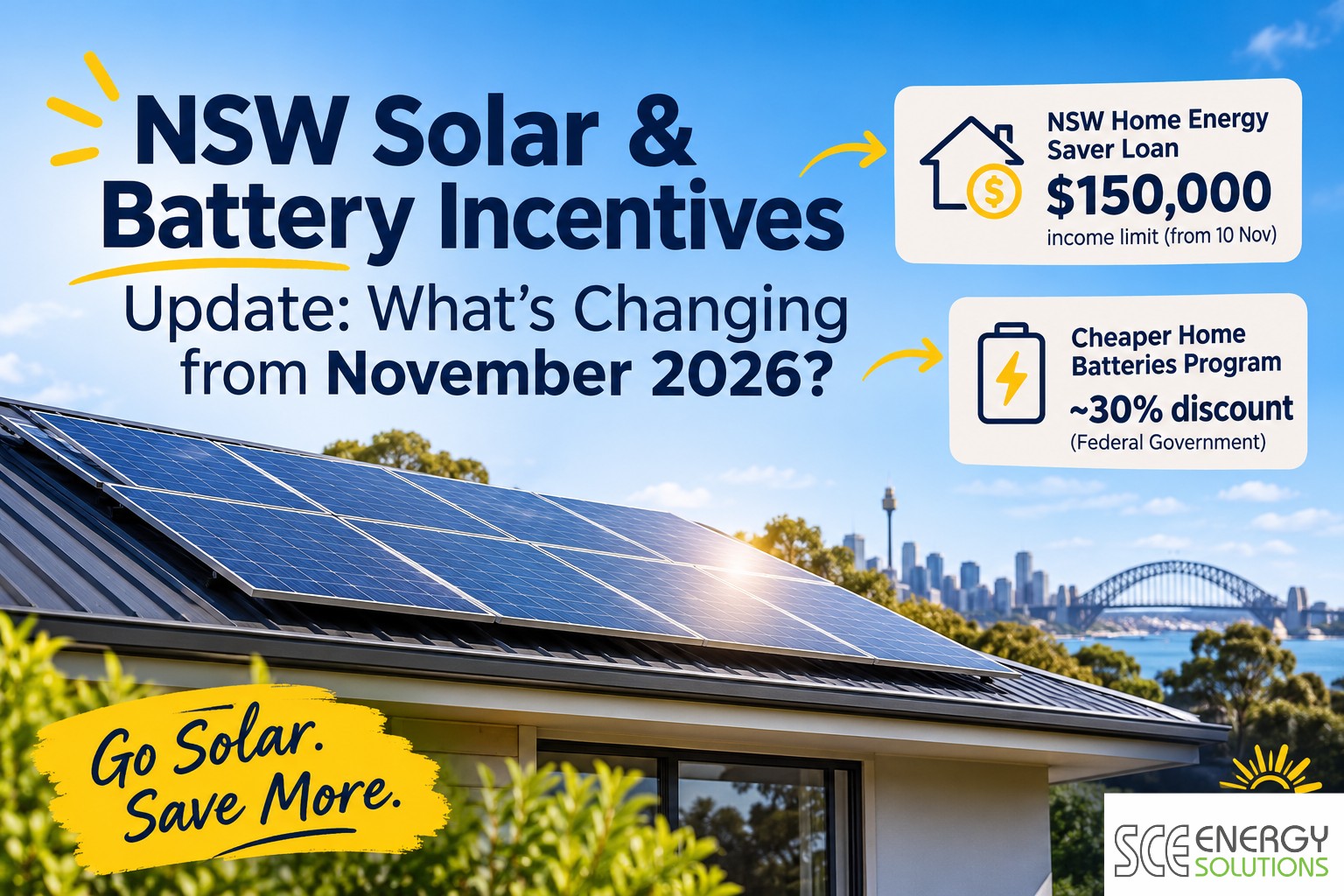
The NSW Government has announced changes to its Home Energy Saver program, reducing the combined household taxable income eligibility threshold for its zero-interest energy upgrade loans from $210,000 to $150,000 per year.
The changes take effect from 10 November 2026 and will impact households looking to access financial assistance for energy upgrades, including rooftop solar and home battery installations.
So, what exactly is changing, and what does this mean for homeowners looking to make the switch to solar?
Let’s break it down.
- What’s changing with the NSW Home Energy Saver program?
Previously, eligible NSW households with a combined annual taxable income of up to $210,000 could apply for a zero-interest loan of up to $15,000.
From 10 November 2026, this income threshold will be reduced to $150,000.
The loan allows eligible homeowners and landlords to spread the cost of approved energy upgrades over a period of up to 10 years without paying interest.
These upgrades include:
- Rooftop solar panel installations.
- Home battery storage systems.
- Reverse-cycle air conditioning.
- Heat pump hot water systems.
- Other eligible energy-efficiency upgrades.
What does this mean for households?
If your combined household taxable income is below $150,000, you can continue to explore the zero-interest loan, subject to the program’s other eligibility and finance-provider requirements.
Importantly, simply receiving a solar quote before the deadline is not enough. Your loan application must be submitted before the cutoff.
- How much financial assistance can you receive?
The Home Energy Saver program offers two different types of assistance.
Zero-interest loans
- Up to $15,000 in finance.
- Repayable for over 10 years.
- Available for eligible energy upgrades, including solar and batteries.
- Subject to household income and finance-provider eligibility.
Home Energy Saver discounts
Eligible households may also access discounts of up to $4,000 towards approved energy upgrades.
These discounts are targeted at households with a combined gross annual income of up to $80,000 or those holding an eligible concession card.
Unlike the loan, the discount program is also designed to include eligible renters, subject to its conditions.
- What about the Federal Government’s battery rebate?
While the NSW Government is changing its loan eligibility requirements, there is also a separate Federal Government incentive worth considering.
The Australian Government’s Cheaper Home Batteries Program provides an upfront discount of around 30% on eligible battery installations.
This incentive is available for eligible batteries connected to new or existing rooftop solar systems, including residential and small business installations.
Importantly, this is a separate federal incentive and does not have the same $150,000 household income eligibility threshold as the NSW Home Energy Saver loan.
This means homeowners who no longer qualify for the NSW zero-interest loan may still be eligible for the federal battery discount.
The amount of support depends on the battery’s eligible capacity and applicable program rules.
- Is installing solar and battery still worth it?
With electricity prices continuing to put pressure on household budgets, investing in solar energy remains a practical way to take greater control of your electricity consumption.
A properly designed solar system allows you to generate electricity during daylight hours, reducing the amount of power you need to purchase from the grid.
Adding a battery takes this step further.
Instead of sending excess solar energy back to the grid during the day, you can store that energy and use it later in the evening when your household needs it.
Some of the key benefits include:
- Lower electricity bills: Generate your own electricity and reduce reliance on grid power.
- Greater energy independence: Store excess solar generation for use when the sun goes down.
- Better use of solar energy: Make more use of the electricity your panels generate rather than exporting it.
- Long-term savings: Reduce exposure to rising electricity costs over the life of your system.
- A more sustainable home: Reduce reliance on conventional grid electricity and support the transition towards renewable energy.
Of course, the savings will depend on your household’s electricity consumption, system size, battery capacity, electricity tariff, and installation costs.
The key is choosing a system that is designed around how you actually use electricity.
- What should NSW homeowners do next?
Government incentives can make the transition to solar and battery storage more affordable, but understanding which programs apply to your circumstances is just as important.
If you’re considering an installation, it’s worth looking at:
- Your current household electricity consumption.
- Whether solar panels alone or a solar and battery combination would be more suitable.
- Your eligibility for the NSW Home Energy Saver program.
- Whether you can access the Federal Government’s Cheaper Home Batteries Program.
- The potential long-term savings based on your energy usage.
Remember, government incentives and rebates have different eligibility requirements, so it’s important to check the latest program guidelines before making a decision.
Thinking about solar or battery storage?
At SCE Energy Solutions, we believe that going solar is about more than simply installing panels on your roof. It’s about understanding your energy needs and designing a system that delivers real value over time.
With more than 18 years of experience in the solar industry, we help homeowners find practical solar and battery solutions suited to their properties, energy consumption and budgets.
Whether you’re considering rooftop solar, adding a battery to an existing system or starting from scratch, our team can help you understand your options.
Ready to explore your solar options?