NSW Solar & Battery Incentives Update: Household Income Eligibility Drops from $210,000 to $150,000

A new update to NSW solar and battery incentives 

If you’ve been considering installing solar panels or a home battery, there’s an important government update worth knowing about. 

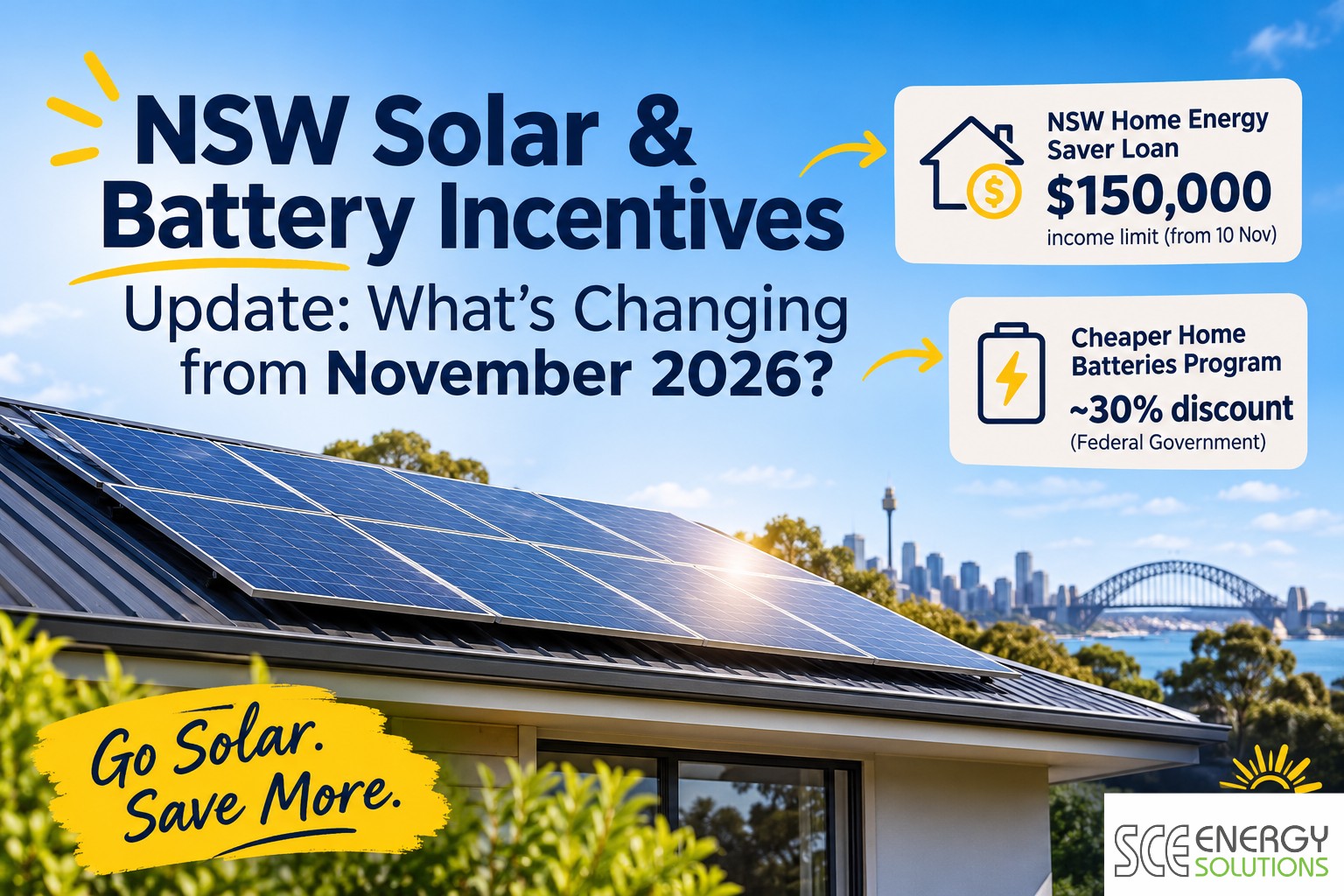
The NSW Government has announced changes to its Home Energy Saver program, reducing the combined household taxable income eligibility threshold for its zero-interest energy upgrade loans from $210,000 to $150,000 per year. 

The changes take effect from 10 November 2026 and will impact households looking to access financial assistance for energy upgrades, including rooftop solar and home battery installations. 

So, what exactly is changing, and what does this mean for homeowners looking to make the switch to solar? 

Let’s break it down. 

  1. What’s changing with the NSW Home Energy Saver program?

Previously, eligible NSW households with a combined annual taxable income of up to $210,000 could apply for a zero-interest loan of up to $15,000. 

From 10 November 2026, this income threshold will be reduced to $150,000. 

The loan allows eligible homeowners and landlords to spread the cost of approved energy upgrades over a period of up to 10 years without paying interest. 

These upgrades include: 

  • Rooftop solar panel installations. 
  • Home battery storage systems. 
  • Reverse-cycle air conditioning. 
  • Heat pump hot water systems. 
  • Other eligible energy-efficiency upgrades. 

What does this mean for households? 

If your combined household taxable income is below $150,000, you can continue to explore the zero-interest loan, subject to the program’s other eligibility and finance-provider requirements. 

Importantly, simply receiving a solar quote before the deadline is not enough. Your loan application must be submitted before the cutoff. 

  1. How much financial assistance can you receive?

The Home Energy Saver program offers two different types of assistance. 

Zero-interest loans 

  • Up to $15,000 in finance. 
  • Repayable for over 10 years. 
  • Available for eligible energy upgrades, including solar and batteries. 
  • Subject to household income and finance-provider eligibility. 

Home Energy Saver discounts 

Eligible households may also access discounts of up to $4,000 towards approved energy upgrades. 

These discounts are targeted at households with a combined gross annual income of up to $80,000 or those holding an eligible concession card. 

Unlike the loan, the discount program is also designed to include eligible renters, subject to its conditions. 

  1. What about the Federal Government’s battery rebate?

While the NSW Government is changing its loan eligibility requirements, there is also a separate Federal Government incentive worth considering. 

The Australian Government’s Cheaper Home Batteries Program provides an upfront discount of around 30% on eligible battery installations. 

This incentive is available for eligible batteries connected to new or existing rooftop solar systems, including residential and small business installations. 

Importantly, this is a separate federal incentive and does not have the same $150,000 household income eligibility threshold as the NSW Home Energy Saver loan. 

This means homeowners who no longer qualify for the NSW zero-interest loan may still be eligible for the federal battery discount. 

The amount of support depends on the battery’s eligible capacity and applicable program rules. 

  1. Is installing solar and battery still worth it?

With electricity prices continuing to put pressure on household budgets, investing in solar energy remains a practical way to take greater control of your electricity consumption. 

A properly designed solar system allows you to generate electricity during daylight hours, reducing the amount of power you need to purchase from the grid. 

Adding a battery takes this step further. 

Instead of sending excess solar energy back to the grid during the day, you can store that energy and use it later in the evening when your household needs it. 

Some of the key benefits include: 

  • Lower electricity bills: Generate your own electricity and reduce reliance on grid power. 
  • Greater energy independence: Store excess solar generation for use when the sun goes down. 
  • Better use of solar energy: Make more use of the electricity your panels generate rather than exporting it. 
  • Long-term savings: Reduce exposure to rising electricity costs over the life of your system. 
  • A more sustainable home: Reduce reliance on conventional grid electricity and support the transition towards renewable energy. 

Of course, the savings will depend on your household’s electricity consumption, system size, battery capacity, electricity tariff, and installation costs. 

The key is choosing a system that is designed around how you actually use electricity. 

  1. What should NSW homeowners do next?

Government incentives can make the transition to solar and battery storage more affordable, but understanding which programs apply to your circumstances is just as important. 

If you’re considering an installation, it’s worth looking at: 

  • Your current household electricity consumption. 
  • Whether solar panels alone or a solar and battery combination would be more suitable. 
  • Your eligibility for the NSW Home Energy Saver program. 
  • Whether you can access the Federal Government’s Cheaper Home Batteries Program. 
  • The potential long-term savings based on your energy usage. 

Remember, government incentives and rebates have different eligibility requirements, so it’s important to check the latest program guidelines before making a decision. 

Thinking about solar or battery storage? 

At SCE Energy Solutions, we believe that going solar is about more than simply installing panels on your roof. It’s about understanding your energy needs and designing a system that delivers real value over time. 

With more than 18 years of experience in the solar industry, we help homeowners find practical solar and battery solutions suited to their properties, energy consumption and budgets. 

Whether you’re considering rooftop solar, adding a battery to an existing system or starting from scratch, our team can help you understand your options. 

Ready to explore your solar options? 
Get in touch with SCE Energy Solutions today for a consultation and find out how you can make the most of the available solar and battery incentives. 


Which Home Battery Is Right for You? Explore Battery Storage Options Available at SCE Solar Battery

Why Consider a Home Battery? 

Installing solar panels is a great way to generate your own electricity, but what happens when the sun goes down? 

Without a battery, any excess solar energy your home doesn’t use may be exported to the electricity grid. A home battery allows you to store that surplus energy and use it later, such as in the evening when your household is using lights, appliances, heating or air conditioning. 

Adding battery storage to your solar system can help you: 

  • Use more of your own solar energy: Store excess daytime generation for use at night. 
  • Reduce grid electricity consumption: Purchase less electricity from your retailer, depending on your energy usage and system size. 
  • Manage electricity costs: Use stored energy during expensive peak-rate periods where your tariff and battery settings make this beneficial. 
  • Improve energy resilience: With a suitably configured backup system, selected appliances or your home may continue receiving power during a grid outage. 
  • Make better use of solar: Get more value from the electricity your panels generate instead of relying heavily on the grid. 

At SCE Energy Solutions, we understand that every property has different energy requirements. That’s why selecting the right battery involves more than choosing a brand. Your electricity consumption, existing solar system, available installation space and backup requirements all play an important role. 

Explore Battery Options Available at SCE Energy Solutions 

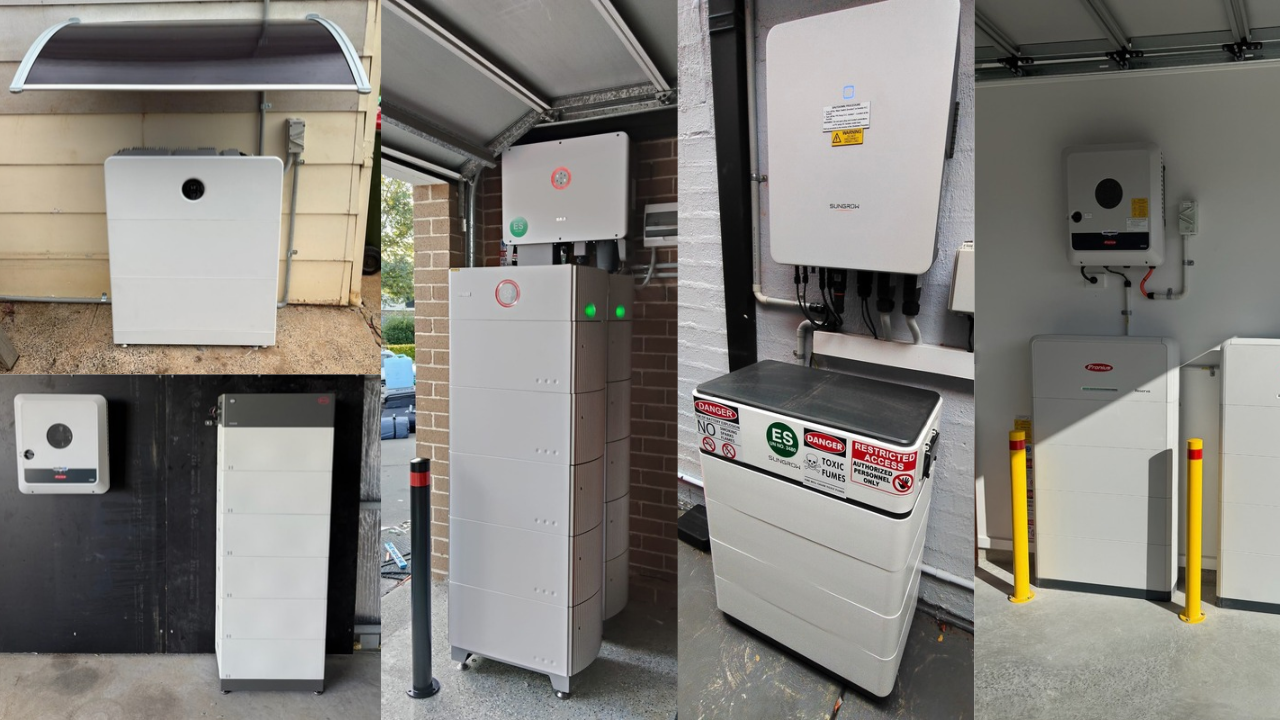
There are several battery brands and system configurations to consider. Let’s look at some of the options, including Fox ESS, Sigenergy, Tesla, GoodWe and Fronius. 

  1. Fox ESS – Flexible Battery Storage

Fox ESS offers battery storage solutions designed to work with compatible solar inverters and help households make better use of their solar generation. 

Depending on the model selected, Fox ESS systems can offer modular storage configurations, allowing the battery capacity to be matched to a household’s energy requirements. 

Potential benefits include: 

  • Modular battery options across selected product ranges. 
  • Storage capacity suited to different household energy needs. 
  • Integration with compatible Fox ESS inverter systems. 
  • Monitoring capabilities for tracking system performance. 

Who might consider Fox ESS? 

Fox ESS may be worth considering homeowners looking for a practical solar and battery package, particularly when installing a new system or assessing a compatible existing setup. 

The right configuration depends on the selected battery and inverter models, required storage capacity, and backup requirements. 

  1. Sigenergy (SIG) – Smart, Integrated Energy Storage

Sigenergy’s SigenStor system takes an integrated approach to home energy management. Its system combines several energy components, including solar inverter, battery storage, power conversion, and energy management. Selected configurations can also incorporate DC electric vehicle charging. 

Potential benefits include: 

  • An integrated approach to solar generation and battery storage. 
  • Modular, stackable battery capacity. 
  • Smart energy management features. 
  • Options for residential and larger energy applications. 
  • Potential integration with compatible EV charging equipment. 

Who might consider Sigenergy? 

Sigenergy could be a good option for homeowners planning a more connected energy setup, particularly those interested in battery storage, smart energy management, and potential future EV charging. 

It is important to check the selected configuration compatibility, backup capability and available features before installation. 

  1. Tesla Powerwall – Battery Storage for Modern Homes

Tesla Powerwall is one of the best-known home battery systems in Australia. It stores electricity generated by solar panels and makes that energy available when the home needs it. 

Tesla Powerwall 3 has a usable energy capacity of 13.5 kWh and includes an integrated solar inverter. Multiple compatible units can be used where greater storage capacity is required. 

Potential benefits include: 

  • A usable storage capacity of 13.5 kWh per Powerwall 3. 
  • Integrated solar inverter technology. 
  • Energy monitoring and control through the Tesla app. 
  • Smart energy management features. 
  • Backup power capability when installed with the required compatible equipment. 

Who might consider Tesla Powerwall? 

Tesla Powerwall may suit homeowners looking for an integrated battery solution with smart monitoring and backup functionality. 

It is particularly worth considering if you want to store solar energy for evening use and have the option of keeping selected household circuits or more of your home powered during an outage, subject to system design. 

Read more on the official Tesla Powerwall website. 

  1. GoodWe – Flexible Storage for Different Energy Needs

GoodWe offers battery storage solutions across several product ranges, including its Lynx Home series. These batteries are designed to work with compatible inverter systems and offer different storage capacities. 

For example, the GoodWe Lynx Home F G2 range offers high-voltage battery configurations from 6.4 kWh to 28.8 kWh, with expansion options depending on the system design. 

Potential benefits include: 

  • Different battery capacities for different household requirements. 
  • Modular and expandable storage options across selected ranges. 
  • Lithium iron phosphate (LFP) battery technology in the referenced Lynx ranges. 
  • Integration with compatible GoodWe inverters. 
  • Monitoring and selecting remote diagnostic features. 

Who might consider GoodWe? 

GoodWe may suit homeowners looking for a flexible battery solution that can be matched to their solar system and energy consumption. 

It can be worth exploring when installing a compatible GoodWe hybrid inverter and battery package. Existing systems must be assessed to confirm compatibility before adding storage. 

Explore the GoodWe battery range. 

  1. Fronius – Premium Solar and Battery Integration

Fronius is known for its solar inverter technology and also offers battery storage solutions. Its Reserve battery range is designed to integrate with compatible Fronius hybrid inverters. 

The Fronius Reserva range offers modular storage options, with models providing approximately 6.3 kWh to 15.8 kWh of usable energy per tower, depending on the configuration. 

Potential benefits include: 

  • Battery storage designed to integrate with compatible Fronius hybrid inverters. 
  • Modular storage options. 
  • DC-coupled energy storage for efficient energy transfer. 
  • Monitoring through the Fronius Solar. Web platform. 
  • Backup functionality when the appropriate compatible equipment is installed. 

Who might consider Fronius? 

Fronius may be worth considering homeowners who value an integrated solar and storage system and are looking to pair compatible battery technology with a Fronius hybrid inverter. 

For an existing Fronius solar system, it is essential to check the inverter model and approved battery compatibility before choosing a battery. Not every Fronius inverter supports every storage option. 

Explore the Fronius Reserva battery range. 

How Do You Choose the Right Battery Size? 

Choosing the correct battery capacity is just as important as choosing the brand. 

A battery that is too small may run out of stored energy before the night is over. A battery that is unnecessarily large may cost more than needed for your household’s typical energy consumption. 

Here are three important considerations. 

  1. Your evening electricity usage

Look at how much electricity your household uses after sunset. If you regularly run air conditioning, pool pumps, electric cooking equipment or other energy-intensive appliances in the evening, you may benefit from a larger battery or higher power output. 

  1. Your existing solar system

Your solar panels need to generate enough surplus electricity to charge your battery. Your installer should assess your solar generation patterns, daytime consumption, and seasonal variations. 

  1. Your backup power requirements

Do you simply want to reduce your electricity bills, or do you also want backup power during outages? 

Not every battery installation automatically provides backup power. The appropriate inverter, backup equipment, electrical configuration, and load selection must be considered. 

Can You Add a Battery to an Existing Solar System? 

Yes, in many cases. 

If you already have solar panels installed, adding a battery may allow you to store excess electricity instead of exporting all of it to the grid. 

However, the process depends on your existing inverter, system configuration, and the battery you want to install. Some systems may require an inverter upgrade or additional equipment, while others may support a suitable battery without replacing the entire solar system. 

An assessment of your current installation can help determine the most practical and cost-effective approach. 

Are Battery Rebates Available in Australia? 

Eligible Australian households and small businesses may be able to access financial support through the Australian Government’s Cheaper Home Batteries Program, subject to current program requirements. 

Eligibility can depend on factors such as the battery’s approved status, usable capacity, installation arrangements, and commissioning requirements. The value of any applicable discount can also change over time. 

Before proceeding, confirm the latest requirements and available incentives for your chosen battery. 

For current information, visit the Australian Government’s Department of Climate Change, Energy, the Environment and Water. 

Why Choose SCE Energy Solutions? 

Choosing a battery is not just about the equipment. It is about ensuring that your complete solar and storage system is designed around your property and energy requirements. 

At SCE Energy Solutions, our approach focuses on helping customers understand their options and identify a solution suited to their needs. 

We can help assess your current solar system, discuss battery storage options, consider your energy usage, and determine the equipment required for your installation. 

Whether you are considering Fox ESS, Sigenergy, Tesla, GoodWe or Fronius, the goal is the same: to help you make an informed decision about your energy future. 

Ready to Explore Your Battery Options? 

Every home use energy differently, so there is no single battery that is right for everyone. 

The best starting point is to understand your electricity consumption, existing solar setup, and what you want your battery to achieve. 

Contact SCE Energy Solutions today to discuss your solar battery options and find out which solution may be right for your home. 

Battery features, specifications, compatibility, pricing, warranties and incentives vary by model and may change. All installations are subject to technical assessment, product availability and applicable Australian requirements. 

Are you looking for Solar and Battery for your home? These Solar Rebates 2026 can be helpful.

  1. What are STCs?

Small-scale Technology Certificates (STCs) are part of the Australian Government’s Small-scale Renewable Energy Scheme. They help reduce the upfront cost of eligible solar installations. 

When you install an eligible solar system, your installer or an authorised certificate agent can generally claim the STCs on your behalf. The financial value is usually passed on as an upfront discount on your quote. The number of certificates depends on factors such as system size, location and installation date. 

Read more: Clean Energy Regulator — Small-scale Technology Certificates. 

  1. Solar rebates and incentives comparison table

Here is a quick comparison of the main programs to investigate as of October 2026. 

Rebate or incentive 

Who is it for? 

What can you receive? 

Official information 

Federal solar STCs 

Eligible residential and commercial solar systems up to 100 kW 

An upfront discount based on the number and market value of eligible certificates 

Check solar STCs 

Mid-scale solar STCs — new from 1 October 2026 

Eligible solar systems above 100 kW and up to 1 MW 

Access to STCs under the expanded scheme, subject to eligibility 

Read the October 2026 changes 

Cheaper Home Batteries Program 

Eligible households and businesses installing qualifying batteries 

An upfront discount through the federal battery certificate scheme 

Check battery program details 

NSW Batteries for Businesses Incentive 

Eligible NSW businesses 

An upfront battery installation discount, potentially higher when combined with new or additional solar 

Check business eligibility 

NSW Batteries for Apartment Buildings Incentive 

Eligible apartment buildings and strata communities 

An upfront discount for shared battery storage, potentially higher with new or additional solar 

Check apartment incentives 

NSW Virtual Power Plant (VPP) Incentive 

Eligible NSW households and small businesses with qualifying batteries 

An incentive for connecting an eligible battery to a participating VPP, plus possible ongoing payments 

Check VPP eligibility 

Please note: These programs have different eligibility rules. Not every customer will qualify, and some incentives apply to battery storage rather than solar panels alone. 

  1. What’s new with solar STCs from October 2026?

The key change is the expansion of the federal STC scheme to eligible solar systems between 100 kW and 1 MW. 

Previously, solar systems above 100 kW generally could not access STCs under the existing small-scale scheme. The expansion opens up a new option for eligible medium-sized commercial solar projects. 

This may be particularly relevant to: 

  • Warehouses and distribution centres 
  • Farms and agricultural facilities 
  • Manufacturing businesses 
  • Commercial buildings and other large electricity users 

The new eligibility applies to qualifying systems installed from 1 October 2026. However, the Clean Energy Regulator expects STC applications for these systems to open in mid-to-late November 2026. 

Eligible projects can also involve a choice between STCs and Renewable Electricity Guarantee of Origin (REGO) certificates, so businesses should compare the available options before deciding. 

Full details: Clean Energy Regulator — Mid-scale solar. 

  1. What about the federal battery rebate?

The Australian Government’s Cheaper Home Batteries Program helps eligible customers reduce the cost of installing qualifying battery storage. 

The discount is generally applied upfront through your installer. The actual amount depends on the battery’s eligible capacity, applicable certificate factors and market values. 

Battery incentives are separate from the standard solar STC discount, so your quote should show which discounts apply to the panels and which apply to the battery. 

For the latest eligibility requirements, visit the official Cheaper Home Batteries Program page. 

  1. NSW battery incentives for businesses and apartments

NSW has also introduced battery installation incentives that may help eligible businesses and apartment buildings manage their electricity costs. 

For businesses: The Batteries for Businesses Incentive became available from 1 September 2026. Eligible projects may receive an upfront discount, with the potential for a larger discount when a battery is installed with new or additional solar capacity. 

For apartment buildings: The Batteries for Apartment Buildings Incentive also became available from 1 September 2026. Eligible buildings may receive an upfront discount towards a shared battery, with a potentially higher discount when new or additional solar is installed. 

The exact benefit depends on project eligibility, system design and the applicable program rules. 

Read the official requirements: 

  1. Can solar and battery incentives be combined?

In some cases, yes. Eligible customers may be able to access more than one incentive, provided they meet the conditions of each program. 

For example, an eligible NSW business could investigate federal solar STCs alongside the NSW business battery incentive and the federal battery program. 

However, eligibility is not automatic. Always ask your installer to confirm which incentives can be combined and to itemise the discounts in your quote. 

  1. How do you know which rebate applies to you?

Before choosing a solar or battery system, consider your property type, electricity consumption, system size and future energy requirements. 

For the most accurate assessment contact us today for a free assessment. 

Disclaimer: This article is general information, not financial or legal advice. Government programs, certificate values and eligibility requirements can change. Confirm current conditions with the relevant government authority and your installer before making a decision. 

Ready to explore solar for your home or business?

If you’re considering solar or adding a battery to your existing solar system, battery rebates can help reduce the upfront cost of your investment.

rebates solar

In 2026, one of the biggest incentives available to Australian households is the Federal Government’s
Cheaper Home Batteries Program, which provides around 30% discount on eligible battery
systems connected to new or existing rooftop solar.

For NSW homeowners, there is also a Virtual Power Plant (VPP) incentive, which can provide
additional financial benefits when an eligible battery is connected to a participating VPP.

What is the Cheaper Home Batteries Program?

The Australian Government’s Cheaper Home Batteries Program was introduced on 1 July 2025 to make battery
storage more affordable for households and small businesses. The program provides around a
30% discount on eligible small-scale battery systems connected to new or existing rooftop solar.

Rather than homeowners applying directly for a government rebate, the discount is generally provided through
an eligible solar or battery retailer and installer. The program operates through the
Small-scale Renewable Energy Scheme (SRES). This means the value of the incentive is
generally reflected in your battery installation quote.

Why is this important?

Solar panels generate electricity during the day, but many households use more electricity in the evening
when solar production has stopped. A battery allows you to store excess solar energy during the day and use
it later, helping you make greater use of the energy your solar system generates. The Federal battery incentive can therefore make it more affordable to add storage to a new or existing
solar system.

What is the NSW Virtual Power Plant incentive?

A Virtual Power Plant, or VPP, connects multiple household batteries so that stored electricity can be managed
and supplied to the electricity grid when it is needed.

For eligible NSW households and small businesses, connecting a battery to a participating VPP can provide an
upfront NSW incentive, as well as the potential to receive ongoing payments or bill credits for energy
exported through the VPP arrangement.The amount available depends on factors including the battery capacity, VPP provider and the terms of the
agreement.

The NSW Government currently allows eligible batteries between more than 2 kWh and up to 50 kWh to participate
in the VPP incentive, with the incentive calculated based on usable battery capacity made available to the
grid, up to 28 kWh.

IncentiveWho Can Get It?BenefitCan It Be Combined?
Federal Cheaper Home BatteriesHomeowners, businesses, and community organisations installing an eligible battery with solar.Approximately 30% off the upfront battery cost.
dcceew.gov.au

energy.gov.au
Yes, can be combined with NSW VPP incentives.
energy.nsw.gov.au
NSW Virtual Power PlantHouseholds that connect their battery to an approved VPP.Additional incentive and/or ongoing payments depending on the VPP provider.
energy.nsw.gov.au
Yes, can be combined with the federal battery discount.
energy.nsw.gov.au

Can you combine the Federal and NSW incentives?

Yes. This is one of the key benefits for NSW homeowners considering a battery.
An eligible battery can receive the Federal Government’s Cheaper Home Batteries Program discount and then
be connected to an eligible VPP to access the NSW Government’s VPP incentive.

The NSW Government specifically confirms that its VPP incentive can be combined with the Federal battery discount. This can significantly reduce the effective cost of installing a battery while also creating an opportunity
to earn ongoing income or bill credits through a VPP.

Who is eligible?

Eligibility depends on the specific program and system. For the Federal Cheaper Home Batteries Program,
eligible battery systems must meet the program requirements and be connected to new or existing rooftop solar.
Approved battery products and appropriately accredited installers are also important requirements.

For the NSW VPP incentive, your battery must meet the relevant capacity requirements, and you must connect
through a participating VPP provider. Your chosen VPP provider will assess your eligibility and explain the
terms of the arrangement.

ItemCost Example
Battery system price$12,000
Federal battery discount (~30%)-$3,600
dcceew.gov.au

energy.gov.au
Estimated price after discount$8,400
NSW VPP incentiveAdditional savings/payment depending on provider.
energy.nsw.gov.au

What should you do before installing a battery?

Government incentives can make battery storage more affordable, but the cheapest battery isn’t necessarily
the best option for every home.

Before choosing a system, consider:

  • Your current electricity usage
  • How much solar energy you generate
  • How much electricity you use at night
  • Your battery storage requirements
  • Battery warranty and expected lifespan
  • Whether the battery is eligible for the relevant incentives
  • Whether the system is compatible with a VPP
  • The expected payback period
  • Your installer’s accreditation and experience

At SCE Energy Solutions we can help you understand your solar and battery options, determine which incentives may apply to your
project and design an energy solution around your home’s individual requirements.

Thinking about adding a battery to your solar system?
Get in touch with
SCE Energy Solutions
to discuss your options.


Government programs, eligibility requirements and incentive amounts can change. The information in this
article is general information only and should be confirmed with an accredited installer and the relevant
government program before making a purchase.